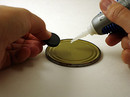
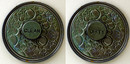
" /> CraftyGoat's Notes: April 2008 Archives

« March 2008 | Main | May 2008 »

April 22, 2008

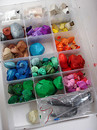
Box of ClayI've already shared some ideas for things you can re-use and recycle with polymer clay — things like tin can lids and cardboard. But today I'd like to talk about "recycling" the clay itself.

One of the nice things about clay is its built-in reusability. Nothing's permanent til it's baked. So if you decide halfway through your project that there's no hope, you can just wad up your clay up and start again. (Or if you're like me, carefully pick apart the separate colors first. Course, I was also the kid who didn't let different foods touch each other on my dinner plate. Maybe this is the grown-up version of that?) Not every medium is forgiving enough to let you start over mid-way without any waste... Aren't we lucky?

Here's a few more ways you can reuse & recycle your polymer clay:
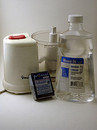
  • Recondition Old ClayDon't throw away old packages of clay. If you have clay that's several years old, it may seem too hard & crumbly to use. But unless the clay is partially cured from being stored in a too-warm place, it's pretty easy to re-condition. Just add a drop or two of mineral oil or baby oil to the clay. If you have a clay-dedicated food processor, mixing the clay in it will make your job easier. But mixing by hand works just fine.
  • Use that scrap clay. Scrap clay is the uncured stuff you have left over from your previous projects. Some of it's perfectly usable as is. But sometimes you mix your cane ends together & end up with an ugly color, or you drop your clay on the floor too many times & it ends up covered with dirt and cat fur. This less-usable stuff is still good for plenty of things — whether it's serving as the middle of a bead (hidden by a decorative top layer) or being used to clean your pasta machine. Check out Polymer Clay Web's Uses for Scrap Clay for more scrap clay ideas.
  • When in doubt, don't throw it out! Even the baked stuff — the stuff that got air bubbles, or broke, or just didn't turn out like you'd hoped — can be creatively repurposed.
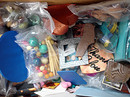
    • Shoebox of Polymer Clay PiecesUse that unfinished bucket as a source of creative challenges. Try randomly pulling things out & finding ways to use them creatively in a completely different way. Have a couple of extra beads left over from a jewelry project? Try making a Bottle of Hope that features them as embellishments — or maybe as a lid. Making Artist Trading Cards is another low-stress way to use something you liked well enough to save. It can be really fun & uplifting to take a messed-up project and turn it into something creative and new.
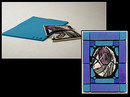
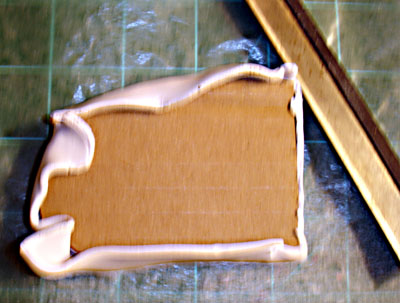
    • Broken Pieces, Before & AfterBroken pieces are great to use as mosaic tiles. Cut or break them down even more, then apply them to a strong clay base. This works for even weak & brittle brands of baked clay, since the mosaic's base provides the piece's strength.

Looking for more recycling tips? Check out these ideas from other polymer clay artists:

I hope you have fun finding ways to reuse and recycle polymer clay. Happy Earth Day!
April 21, 2008

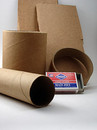
Cardboard AssortmentIf you do much of your shopping online, you've probably built up quite a collection of cardboard shipping boxes. And, at least around here, cardboard boxes aren't part of the city's recycling program. So what to do with all that cardboard? Cover it with polymer clay, of course!

What Cardboard Is Good For

  • Adding lightweight bulk
  • Serving as an armature for shapes and structures not "natural" for polymer clay (like tall, hollow tubes)
  • Allowing you to use less clay for larger items

Cardboard Items to Cover with Clay

  • Shipping boxes: Use a sharp knife to cut down your shipping boxes into any size and shape you like. Use a template to cut and stack multiple layers if you want extra depth. This allows you to create a large form that's lightweight but has extra bulk.
  • Soap Boxes: Soap boxes are plentiful and are a perfect size for covering. Check out HGTV's site for Michelle Ross's covered soap box project.
  • Matchboxes: Matchboxes are a wonderful armature for sliding drawer pendants. Fair warning, though. Get really into making these & you're liable to have baggies full of matches & no place to strike them. I get the impression this bothers some family members. :-)
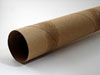
  • Cardboard TubeCardboard Tubes: I already mentioned making a polymer clay top hat from a toilet paper roll. But cardboard tubes' different sizes and strengths make them useful for a variety of things:
    • Try toilet paper or paper towel rolls for making napkin rings.
    • Sturdy rolls that are large enough to fit over your hand make a great base for a bracelet.
    • Tall, heavy cardboard tubes are great to decorate as pen holders. For a nice example, check out Sue Gentry's pen holder.

How to Cover Cardboard with Polymer Clay

  • You don't have to coat the cardboard with anything (you could cover it as is), but it may be hard to do as the clay doesn't grip the cardboard's texture very well.
  • I had the best results coating the cardboard with Sobo Glue or acrylic paint, then letting that dry before covering with clay. Spreading TLS on the cardboard before covering also works.
  • Thicker sheets of clay (i.e., the 2nd-3rd thickest setting on the pasta machine) are easier to work with, especially if you're wrapping the clay around sharp cardboard edges.
  • Another option is to do a couple of layers of clay to cover the cardboard base. Use a thicker base coat of clay to smooth things out. After that's baked, add a decorative layer.

Removing the Cardboard

In many cases, it works well to leave the cardboard in place after baking so it can continue to add support to your structure. But if you just want to use the cardboard as a temporary armature to remove after baking, here are a couple of tips:
  • Use foil or wax paper instead of glue for easier removal.
  • After baking, leave your polymer clay piece soaking overnight to moisten the cardboard and make it easier to remove. If the clay and cardboard are still stuck together in the morning, try running a needle tool along the edge. But be careful not to force the cardboard. You're likely to hurt the clay too.

I hope you enjoy upcycling your cardboard into something creative. As always, I'd love to hear your ideas!

April 18, 2008

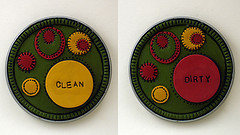
Finished MagnetFinally, a crafty answer to that age-old question: Are the dishes in the dishwasher clean or dirty? This project takes a recycled can lid and turns it into a dishwasher magnet with a reversible Clean/Dirty indicator.

Supplies

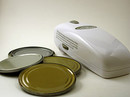
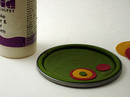
  • Can LidsCan Lid: The juice lids from the frozen concentrate stuff work great since they already have nice smooth edges. Otherwise, I'd recommend buying the Handy Can Opener for about $8 at CVS (also available online). The nice thing about this brand is it removes the entire top of the can, leaving no jagged edges. Use it to open all your cans & soon you'll have stacks of lids to play with. I toss my lids in my dishwasher's silverware basket to clean them before I use them.
  • Polymer Clay: I recommend a stronger clay, such as Premo, so nothing breaks if it happens to fall on the floor.
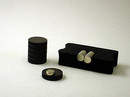
  • Supplies: MagnetsMagnets: You'll need two magnets. The first should be the little-bitty super-strong type (for inside the reversible indicator). The second should be a standard strength magnet (for the back of the lid).
  • Liquid Clay
  • Tools: Pasta machine or brayer, clay extruder, cookie cutters, clay knife, letter stamps
  • Super glue: I like Loctite Control Gel

Instructions

  1. Step 1: Prepare Clay

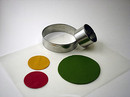
    Prepare clay. Condition your clay, then use your pasta machine or brayer to roll out very thin sheets. You'll want a background sheet as big as the lid and two smaller sheets for the reversible magnet. These three pieces need to be almost paper-thin -- I used the second-thinnest setting on my pasta machine. If your layers are too thick, your magnet won't be able to connect through the clay to the can lid.

    You can also go ahead and roll out any other embellishments you want -- these can be any thickness you like.

  2. Step 2: Cover Lid with Clay

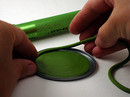
    Add background clay to lid. First, give the lid a thin coating of liquid clay to help the polymer clay stick as you work. If you have round cookie cutters in the appropriate sizes, use these to cut out your clay pieces. (If you don't have a cookie cutter, you can make a template with card stock or just eyeball it.) When applying the background piece, roll it down gradually to avoid trapping air bubbles. If you do notice any air bubbles, use a needle to "pop" them before you bake. For this project, air bubbles don't just look bad -- they can also prevent the magnet from getting good contact with the lid.

    If you have a clay extruder, you can roll a snake to go around the inner edge of the can lid. This hides any uneven edges on the clay sheet and also frames the piece nicely.

  3. Step 3: Make Magnet Pieces

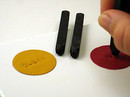
    Make & bake magnet pieces. Use a smaller cookie cutter or template to cut out two clay pieces of the same size. These will be the two sides of your reversible magnet. I used different colors for mine, but you can do whatever you like. Place these on your baking surface, since they'll be tricky to move after stamping. Use letter stamps (or any of these other lettering methods) to spell out the words "Clean" and "Dirty." I had the best results when I started with the middle letter and worked out from there -- it was much easier to center it that way. Leaving them separate, bake these two pieces. We want to make sure they stay nice and flat & don't get distorted when we assemble the magnet.

  4. Step 4: Embellish Lid

    Embellish your lid. While those pieces are baking, decorate the rest of the lid. Try texturing, attaching 3-D clay pieces, or anything else you like. Just be sure to leave a spot big enough for your magnet.

  5. Step 5: Assemble Magnet

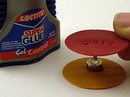
    Assemble magnet & bake. Once your clean/dirty clay pieces have baked and cooled, use super glue to sandwich a super-strong magnet in the middle. Double-check that the words are going the same direction on both sides, and that the circle's edges are lined up before you do the gluing.

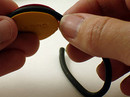
    Step 5b: Create Edge for MagnetAfter the glue is set, make a thin clay snake to wrap around the magnet's edges. Don't create a raised edge, though, or it could keep the magnet from making contact.

    Bake the magnet and can lid according to the clay manufacturer's instructions.

  6. Step 6: Glue Magnet to Lid Back

    Finishing touches & final assembly. After everything has baked and cooled, you may wish to do antiquing, sanding, buffing, varnishing, etc. I antiqued my piece with black paint to highlight the lettering and texture. Once you're happy with the looks of the lid, add a regular-strength magnet to the back. Test before gluing: depending on your magnets' strength, you may need to avoid your "Clean/Dirty" magnet's spot to keep the two magnets from repelling each other.

    Attach your new magnet to the dishwasher & set the indicator appropriately. Your family members now have one less thing to wonder about!

Finished Silver MagnetThere are lots of options for using can lids with polymer clay. If you create something cool, let me know. I'd love to see what you come up with!

Of course, can lids aren't the only recycle-able you can cover with polymer clay. Check out this list of things to re-use and recycle with clay. And stick around for more Earth Day ideas!

Psst! Not a crafter? You can also buy these dishwasher magnets in my store.

About this Site

CraftyGoat's Notes is all about sharing polymer clay tips & tricks that have worked for me. (And even a few that haven't!)

Read more about CraftyGoat's Notes...

Buy My Book

Archives

Enter your address to get CraftyGoat's Notes by email:

Delivered by FeedBurner